
Understanding Addiction: Is It Truly a Disease?
Few questions in modern medicine and public health spark as much debate as this one: Is addiction a disease? For decades, society has swung between viewing addiction as a moral failing, a lack of willpower, or a lifestyle choice. However, decades of rigorous scientific research have painted a very different — and far more serious — picture. Today, the world’s leading medical and psychiatric organizations agree: addiction is a chronic brain disease, and treating it as anything less puts millions of lives at risk.
Understanding the true nature of addiction is not merely an academic exercise. It has profound implications for how we treat those who suffer, how we allocate healthcare resources, and how we reduce the enormous personal, social, and economic damage that substance use disorders cause every year across Europe and the world.
What Does “Disease” Actually Mean in This Context?
Before exploring the evidence, it is important to define what we mean by disease. A disease is generally defined as a condition that involves a disruption of normal bodily or mental functioning, has identifiable symptoms, a known or partially understood pathophysiology, and responds to treatment. By every one of these criteria, addiction qualifies.
The American Society of Addiction Medicine (ASAM) officially defines addiction as “a treatable, chronic medical disease involving complex interactions among brain circuits, genetics, the environment, and an individual’s life experiences.” Similarly, the World Health Organization (WHO) and the Diagnostic and Statistical Manual of Mental Disorders (DSM-5) classify substance use disorders as legitimate medical conditions that require professional diagnosis and treatment.
The Brain Science Behind Addiction
One of the most compelling pieces of evidence that addiction is a disease lies in what it does to the human brain. Modern neuroimaging technologies such as PET scans and fMRI have allowed scientists to observe structural and functional changes in the brains of people with addiction — changes that are measurable, consistent, and deeply damaging.
The Reward System Hijack
At the core of addiction is the brain’s dopamine reward system. Substances such as alcohol addiction treatment, opioids, cocaine addiction treatment, and methamphetamine flood the brain with dopamine — a neurotransmitter associated with pleasure and motivation — at levels far beyond what natural rewards like food or social interaction can produce. Over time, the brain adapts by reducing its natural dopamine production and the number of dopamine receptors, making the individual incapable of feeling pleasure without the substance. This state is known as anhedonia, and it is one of the primary drivers of compulsive drug-seeking behaviour.
Damage to the Prefrontal Cortex
Chronic substance use also damages the prefrontal cortex — the area of the brain responsible for judgment, impulse control, decision-making, and the ability to foresee consequences. This neurological damage explains why people with addiction continue using substances despite devastating personal consequences: job loss, broken relationships, serious health problems, and legal trouble. It is not a lack of character — it is measurable brain damage.
The Role of Stress and the Amygdala
The amygdala, which governs emotional responses and stress, also undergoes significant changes during addiction. As the disease progresses, the amygdala becomes hyperactivated during periods of withdrawal, producing intense anxiety, irritability, and emotional pain. This drives individuals back to substance use not for pleasure, but simply to feel normal — a hallmark of physical and psychological dependence.
Genetic and Environmental Risk Factors
If addiction were purely a choice, genetics would play no role. But research consistently shows that genetic factors account for 40–60% of a person’s vulnerability to addiction. Individuals with a family history of substance use disorders carry a significantly elevated risk — not because they are weak, but because of inherited variations in brain chemistry and stress response systems.
Environmental factors also play a critical role. Childhood trauma, adverse childhood experiences (ACEs), poverty, peer pressure, chronic stress, and lack of social support all dramatically increase the risk of developing addiction. This biopsychosocial model demonstrates that addiction arises from a complex interplay of biology, psychology, and social circumstances — further confirming its status as a disease rather than a simple choice.
The Progressive and Dangerous Nature of Addiction
Like other chronic diseases such as diabetes or hypertension, addiction is progressive. Without intervention, it tends to worsen over time, not improve. The dangers of untreated addiction are severe and wide-ranging:
- Fatal overdose: Opioid overdose alone kills tens of thousands of people in Europe and North America every year.
- Organ damage: Alcohol addiction causes liver cirrhosis, pancreatitis, and heart disease. Stimulants cause cardiovascular damage and stroke.
- Mental health deterioration: Addiction dramatically worsens or triggers co-occurring disorders such as depression, anxiety, PTSD, and psychosis.
- Social destruction: Relationships collapse, employment is lost, and financial ruin often follows.
- Infectious disease: Intravenous drug use spreads HIV, Hepatitis C, and other bloodborne illnesses.
- Criminal consequences: Addiction is closely linked to criminal behaviour, both as a cause and a consequence.
These are not abstract risks. They are the daily reality of millions of individuals and families across Europe who are living with the devastating consequences of untreated substance use disorder.
Why the “Choice” Argument Is Dangerous
Dismissing addiction as a matter of choice or moral weakness is not only scientifically incorrect — it is actively harmful. When addiction is stigmatised as a personal failing, individuals are less likely to seek help, families are less likely to support treatment, and healthcare systems are less likely to fund adequate care. Stigma kills. People die waiting for help they were too ashamed to ask for, in a system that was too underfunded to provide it.
Recognising addiction as a disease removes the shame that prevents help-seeking, validates the suffering of those affected, and places addiction treatment within the mainstream of healthcare — where it belongs.
Evidence-Based Treatment: There Is a Path to Recovery
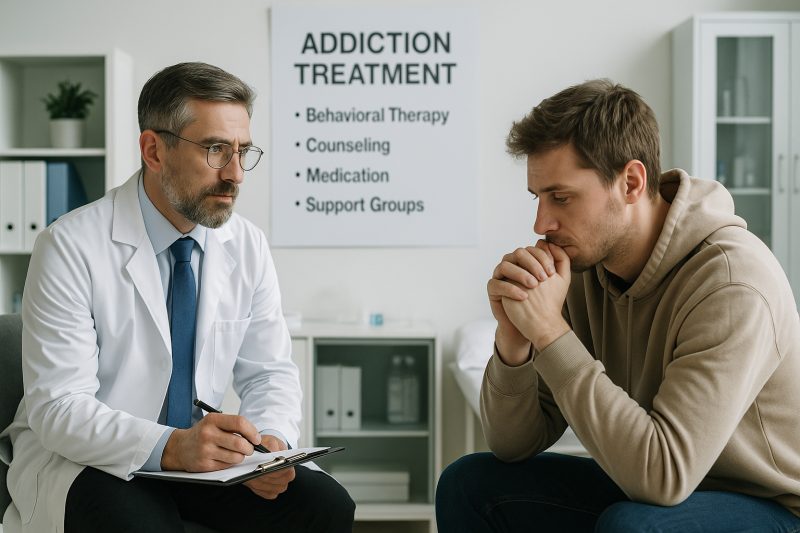
The good news is that, like other chronic diseases, addiction is treatable. Evidence-based treatment approaches have been shown to dramatically improve outcomes, reduce harm, and support long-term recovery. Effective treatments include:
- Medically supervised detoxification to manage withdrawal safely
- Pharmacotherapy — medications such as methadone, buprenorphine, naltrexone, and acamprosate that reduce cravings and prevent relapse
- Cognitive-Behavioural Therapy (CBT) to address the thought patterns underlying addictive behaviour
- Motivational Interviewing (MI) to build readiness for change
- Dual diagnosis treatment to address co-occurring mental health conditions simultaneously
- Residential rehabilitation programmes offering intensive, structured care
- Aftercare and relapse prevention planning to support sustained recovery
Recovery is possible. But it requires professional help. Attempting to overcome addiction alone — especially without medical supervision during withdrawal — can be physically dangerous and dramatically increases the risk of relapse.
Seeking Professional Help Across Europe
At European Addiction Centers (EAC), we connect individuals and families with accredited, evidence-based addiction treatment centres across Europe. Whether you are dealing with alcohol dependence, opioid addiction, prescription drug misuse, cocaine use disorder, or any other substance use condition, professional help is available, accessible, and effective.
Taking the first step toward treatment is not a sign of weakness — it is the single most courageous and medically sound decision a person struggling with addiction can make. The science is clear: addiction is a disease, and like all diseases, it deserves — and responds to — proper medical care.
Frequently Asked Questions About Addiction as a Disease
1. Is addiction officially recognised as a disease by medical authorities?
Yes. Major organisations including the World Health Organization (WHO), the American Society of Addiction Medicine (ASAM), and the DSM-5 all classify addiction (substance use disorder) as a chronic medical disease with biological, psychological, and social components.
2. Does recognising addiction as a disease remove personal responsibility?
No. Recognising addiction as a disease does not eliminate personal responsibility — just as a cancer diagnosis does not remove responsibility for following a treatment plan. It does, however, shift the focus from blame and shame toward effective medical care and recovery support, which produces far better outcomes.
3. Can someone recover from addiction permanently?
Many people achieve long-term, sustained recovery. However, because addiction is a chronic disease, there is always a risk of relapse — similar to relapse in other chronic conditions. This is why ongoing treatment, support, and aftercare are so important. Relapse should be seen as a signal to resume or adjust treatment, not as failure.
4. What are the first signs that someone has developed an addiction?
Early warning signs include increased tolerance (needing more of a substance to achieve the same effect), withdrawal symptoms when not using, neglecting responsibilities, continued use despite negative consequences, failed attempts to cut back, and spending excessive time obtaining or recovering from the substance.
5. Is addiction genetic? Can it be inherited?
Research shows that genetic factors account for approximately 40–60% of addiction vulnerability. Having a parent or close relative with a substance use disorder significantly increases your own risk. However, genetics alone do not determine destiny — environment, trauma, and access to support also play major roles.
6. Why can’t people with addiction just stop using on their own?
Because addiction involves measurable changes to brain structure and function, including damage to areas controlling impulse control and decision-making. Withdrawal from certain substances can also be medically dangerous or even life-threatening. Professional medical support is essential for safe and effective recovery.
7. What is the difference between dependence and addiction?
Physical dependence refers to the body adapting to a substance and experiencing withdrawal when it is removed. Addiction (or substance use disorder) involves compulsive drug-seeking despite harmful consequences, driven by brain changes. A person can be physically dependent without meeting the full criteria for addiction, but the two often co-occur.
8. Are some substances more addictive than others?
Yes. Substances vary in their addictive potential based on how powerfully and rapidly they affect the brain’s reward system. Nicotine, heroin, cocaine, methamphetamine, and alcohol are among the most addictive substances known. However, any substance that affects brain chemistry carries a risk of developing a use disorder.
9. How long does addiction treatment take?
There is no universal timeline. Treatment duration depends on the substance involved, the severity of the disorder, the presence of co-occurring conditions, and individual factors. Most evidence suggests that treatment lasting at least 90 days produces significantly better outcomes than shorter programmes. Recovery is a long-term process, not a quick fix.
10. How can I help a loved one who has an addiction?
The most important steps are to avoid enabling behaviour, educate yourself about addiction as a disease, express concern without judgment, and encourage professional help. Setting firm but compassionate boundaries is also essential. Organisations like European Addiction Centers (EAC) can provide guidance for families as well as those directly affected.
11. Is it safe to detox from substances at home?
In most cases, no. Withdrawal from alcohol, benzodiazepines, and opioids can be medically dangerous, and in some cases life-threatening. Medically supervised detoxification in a clinical setting is the safest and most effective way to begin the recovery process, ensuring that withdrawal symptoms are properly managed and complications are prevented.
12. Where can I find accredited addiction treatment in Europe?
European Addiction Centers (EAC) connects patients with a network of accredited, evidence-based treatment centres across Europe. Whether you need residential rehabilitation, outpatient programmes, or dual diagnosis treatment, professional help is available. Contact us today to take the first step toward recovery.






Leave A Comment